
The whole market in one search.
Winboard is a neutral marketplace for real-world advertising. Asset owners list billboards, screens, venues and spaces at the rate they set. Buyers search all of it by audience, see the price before they enquire, book across any number of owners on a single order, and get proof of play back. Winboard runs the search, the booking, the data and the settlement in between, and owns none of the inventory.
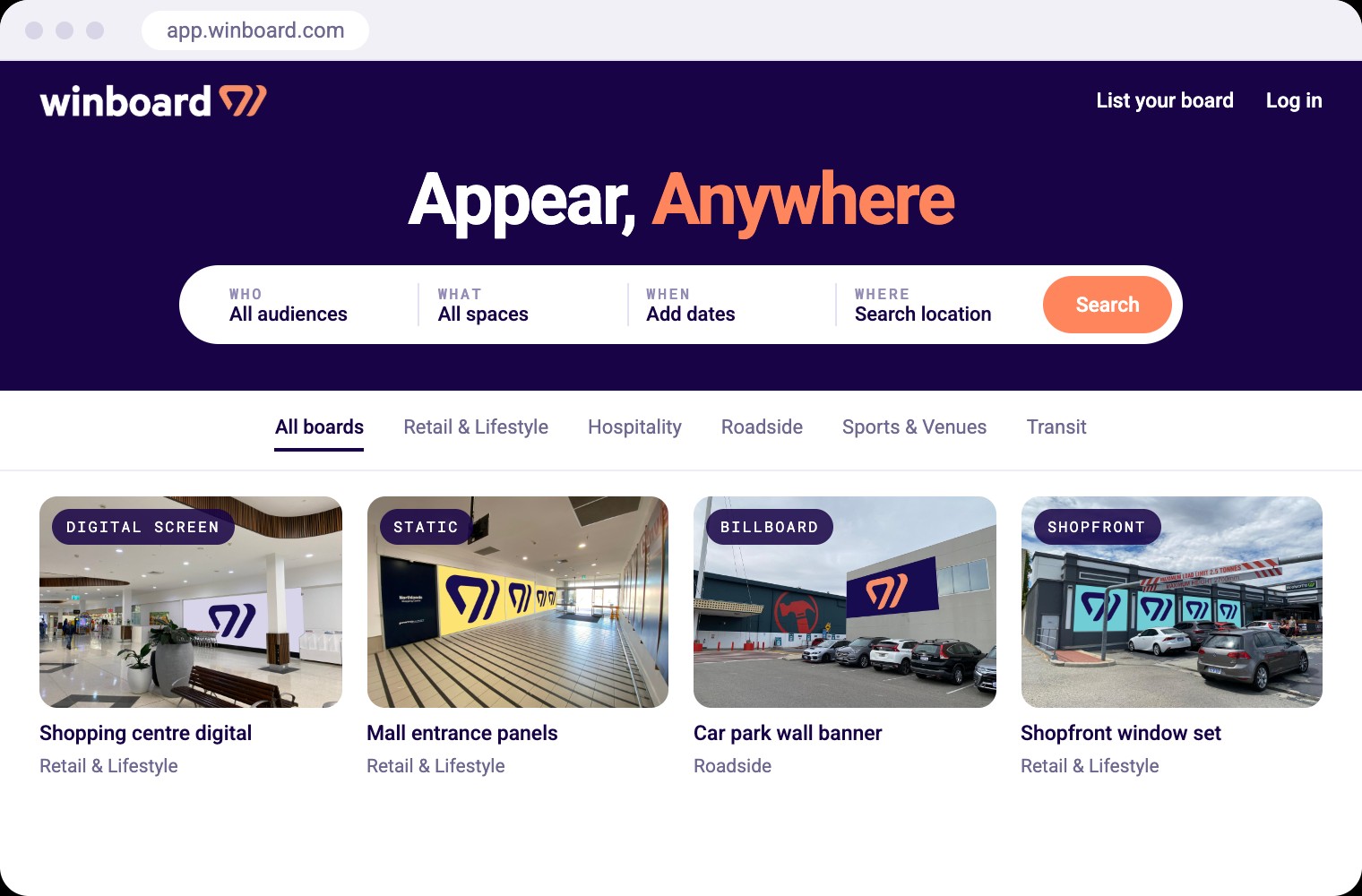
What Airbnb does for property owners, Winboard does for advertising.
Real-world media has always been bought owner by owner: a rate card here, a quote there, a different way of saying yes every time. Winboard puts every listed owner on one standard. The listing carries the specs, the creative guidelines, the availability and the owner’s rate. The search ranks it by the audience the buyer is after. The booking goes to the owner for approval, then one invoice and one proof of play view come back, however many owners are on the plan.
The convenience of programmatic with the certainty of direct.
Search by audience, not just by location.
Describe who you want to reach and every listed space is ranked by who is actually in front of it, hour by hour, from observed device data. Fewer close-enough placements on the plan. How audience targeting works
Transparent, owner-set pricing.
Rates are visible before you enquire. The estimate you put in front of a client is the price you can book.
Multi-owner buys on one IO.
A pack of sites across several owners as one product, one insertion order, one invoice. Owners settle pro rata behind the scenes.
Owner approval built in.
Every campaign is approved by the owner before it goes live, inside the workflow, with a timestamp. No surprise rejections after the client has signed off.
Proof of play in the same place.
Verification and proof of play sit against the order they belong to. Reconciliation stops being a separate job.
Open to your stack.
Winboard runs as a neutral exchange. Listings sync from an owner’s own CMS by API or feed, and DSP connections are in progress so programmatic teams can book directly.
One search, one IO, one invoice, one proof of play view.
Today, six owners means six rate cards, six insertion orders, six invoices and six proofs of play. On Winboard:
Who is on the marketplace.
Brands, agencies and media buyers.
Brands advertising direct, agencies managing many clients, and media buyers filling the gaps the networks leave. No platform fee for any of them.
Everyone with a space to list.
Media owners, network operators, venues, precincts, independents and owners of a single site, listing what they choose on their terms.
Halo, inside every booking.
Halo profiles every listed space by daypart from observed, opted-in device movement, and lets the audience that saw a campaign be reached again online. It sits inside every booking at no data fee.
Every space an audience passes through.
Billboards and large format, digital screens, retail and shopping centres, transit and street furniture, airports, stadiums and venues, hospitality, fleets, precincts, mine site camps and owned audiences such as podcasts and newsletters.
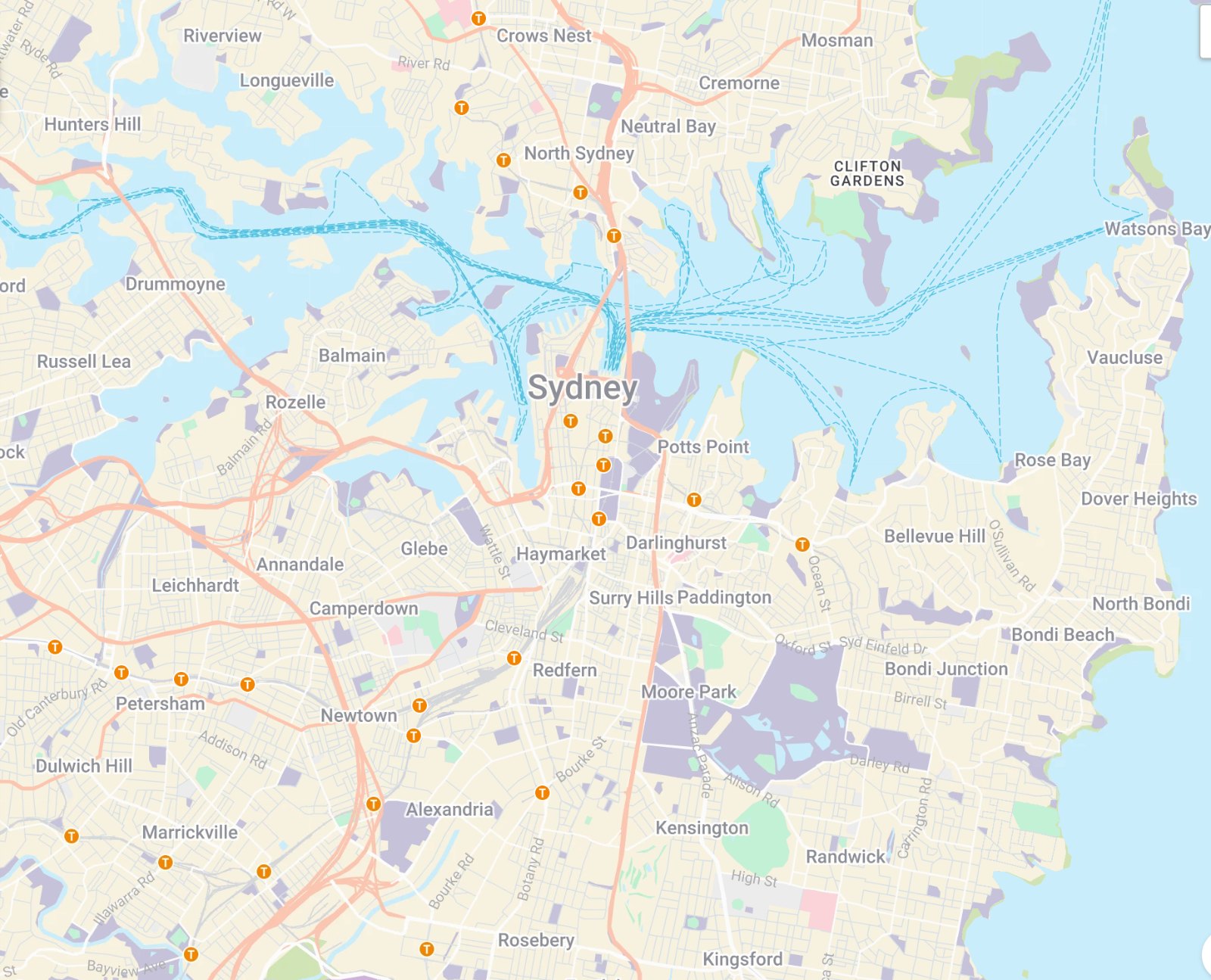
From listed to settled, in five steps.
Listed.
The owner adds the space with specs, guidelines, availability and rate. It is live on the marketplace with its Halo profile.
Found.
A buyer searches by audience, space, dates or location and adds the space to a plan.
Booked.
The plan goes on one insertion order. The owner receives the booking and approves it in the workflow.
Live.
Creative is uploaded to spec, the campaign runs, and proof of play is returned against the order.
Settled.
The buyer pays one invoice. Winboard pays each owner their share by EFT once the booking is collected.
Questions about the marketplace.
Neither. Winboard owns no inventory and does not plan or buy on anyone’s behalf. It is the neutral layer where asset owners list and buyers book, with the data and settlement handled in between.
The owner, on every listing. Winboard publishes it as set and charges the buyer nothing on top. Winboard earns a share from the owner on booked revenue.
Yes. That is the point of the marketplace: one plan, one insertion order and one invoice across any number of owners, each of whom approves their own sites.
Approval happens before anything goes live, inside the workflow, so a declined site is swapped before the client has committed. Nothing runs without the owner’s approval.
Searching the marketplace is open. Booking, approving and reporting happen inside an account, which is free to create.